European AI-powered robotics takes centre stage at the European Parliament
15 AI-powered robots, leading European researchers, industry representatives and policymakers came together in Brussels for the euROBIN Final Event, showcasing Europe’s excellence in robotics and discussing how to turn scientific leadership into global industrial competitiveness.
On 2 September 2026, the European Parliament in Brussels became a showcase for the future of European robotics as euROBIN brought together some of Europe’s most advanced AI-powered robotic technologies for its Final Event.
Hosted by MEP Axel Voss, the event placed European robotics and Physical AI at the heart of the political debate, bringing researchers, industry representatives and policymakers together to discuss a key challenge for Europe: how to translate its world-class research and innovation capabilities into technological and industrial leadership.
The event opened with remarks from MEP Axel Voss; Alessandro Chiocchetti, Secretary-General of the European Parliament; Thomas Skordas, Deputy Director-General at the European Commission’s DG CONNECT; and Prof. Alin Albu-Schäffer, coordinator of euROBIN.
Their participation set the scene for a day focused not only on what European robotics can already achieve, but also on what is needed for Europe to remain competitive as advances in Artificial Intelligence accelerate the development of increasingly autonomous, adaptable and capable robots.
15 European AI-powered robots in action
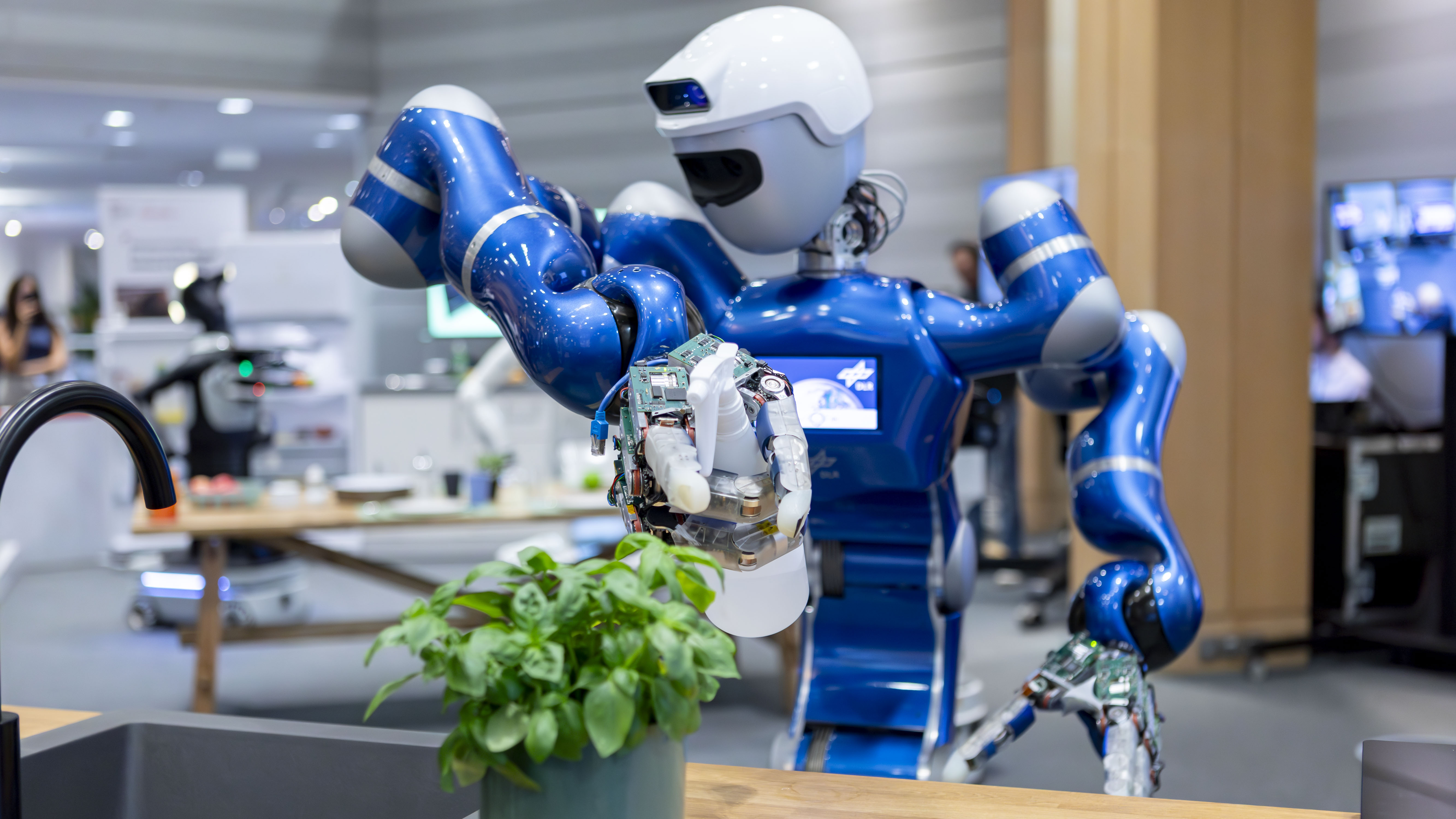
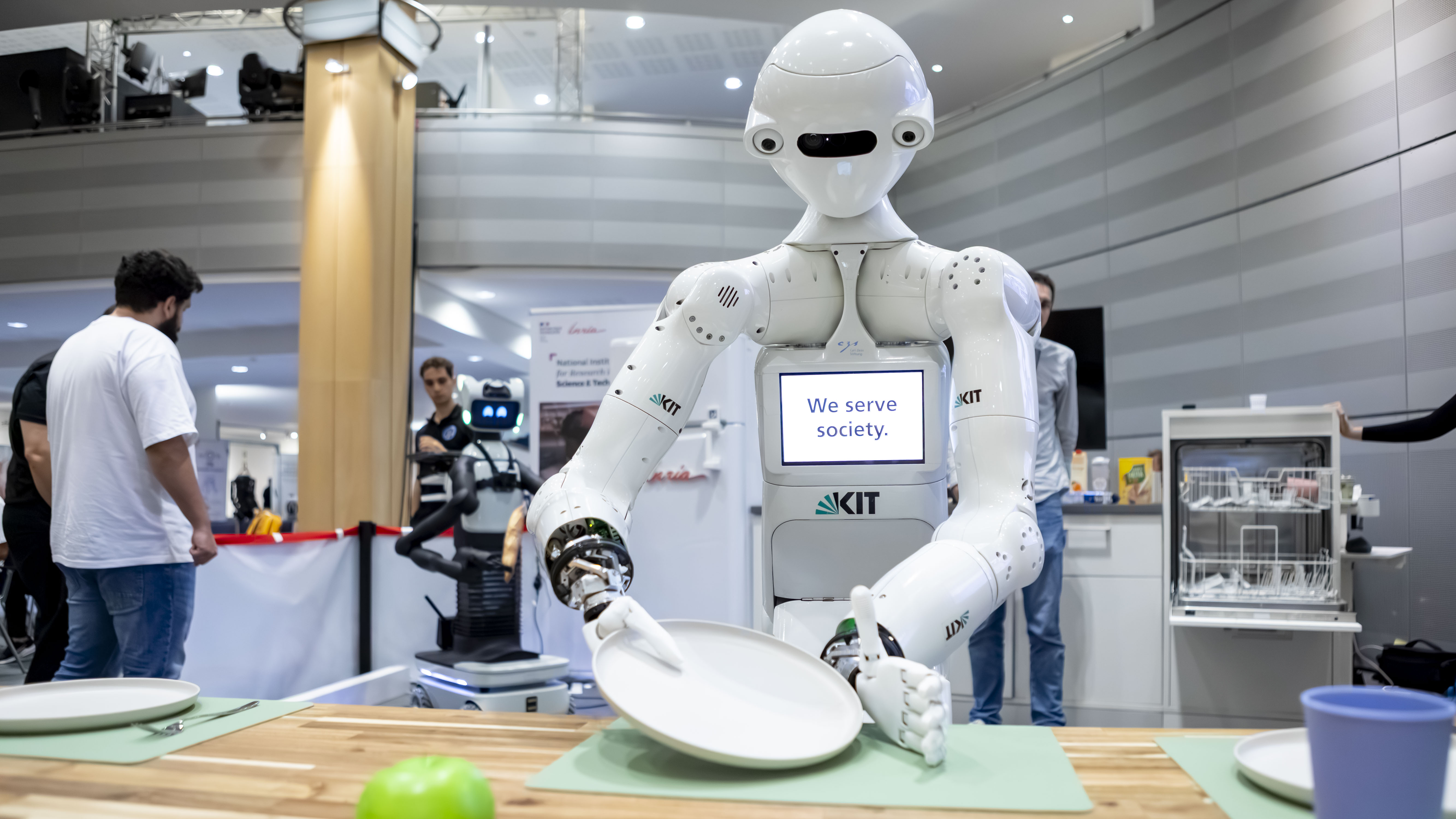
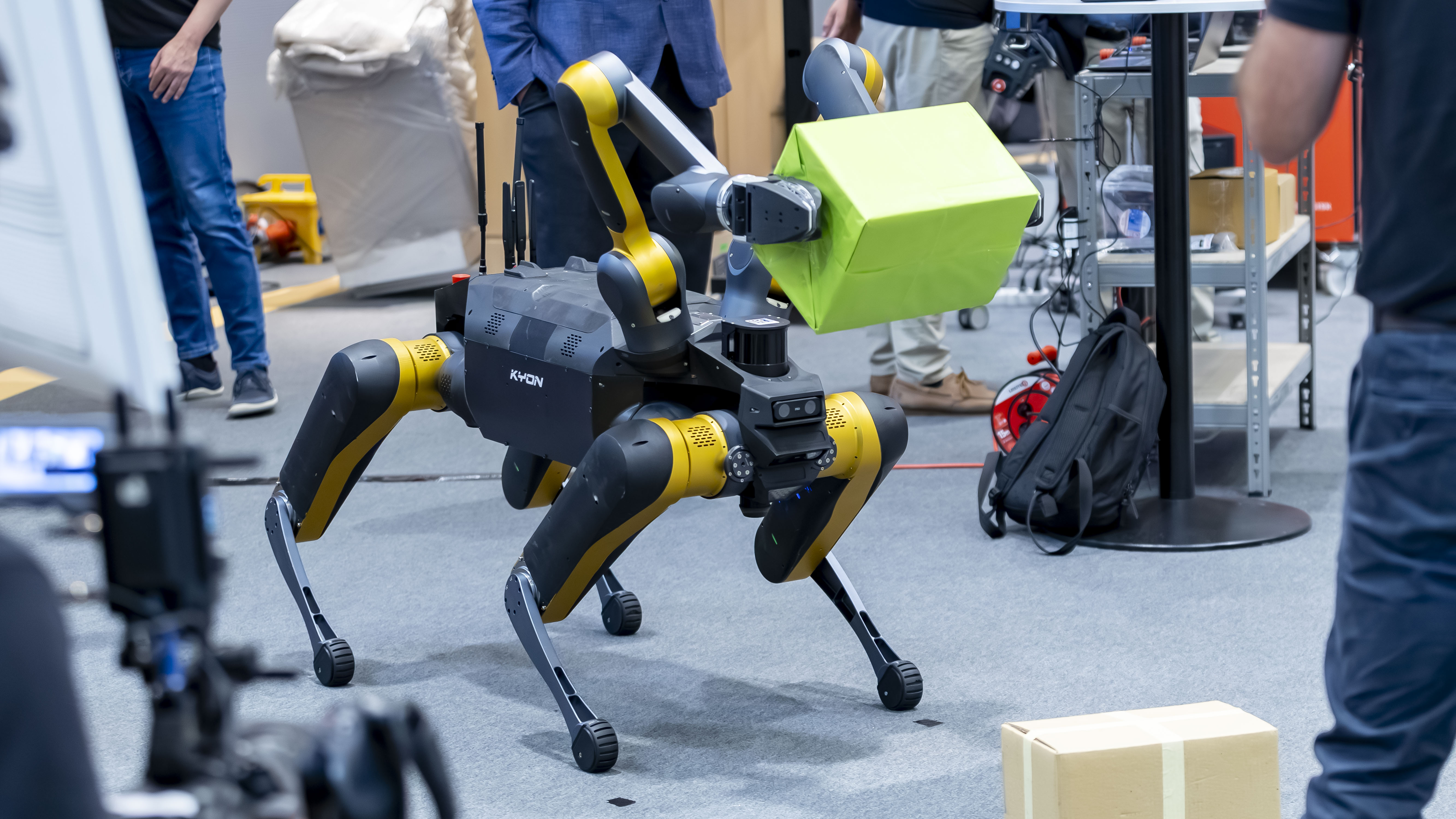
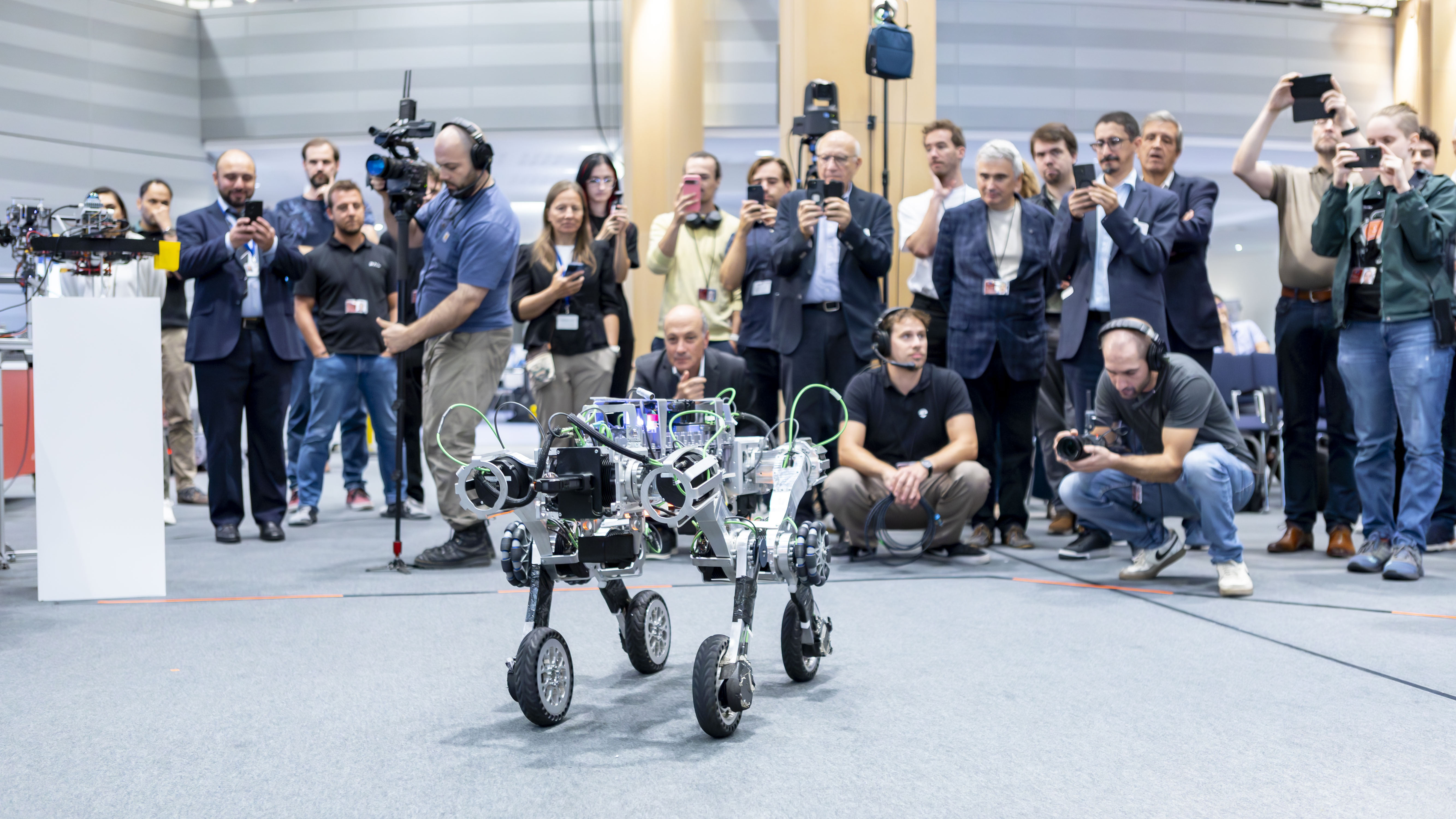
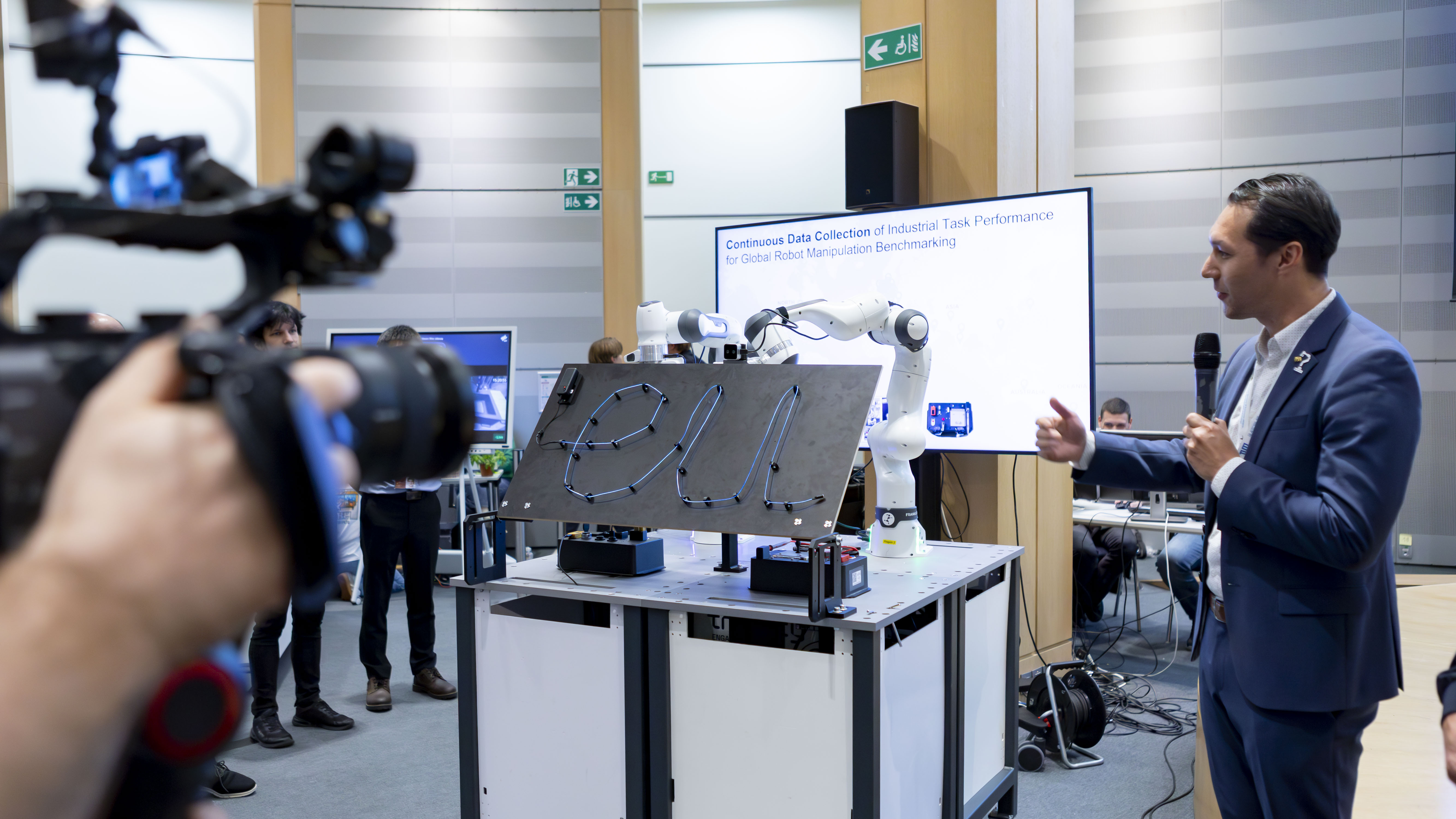
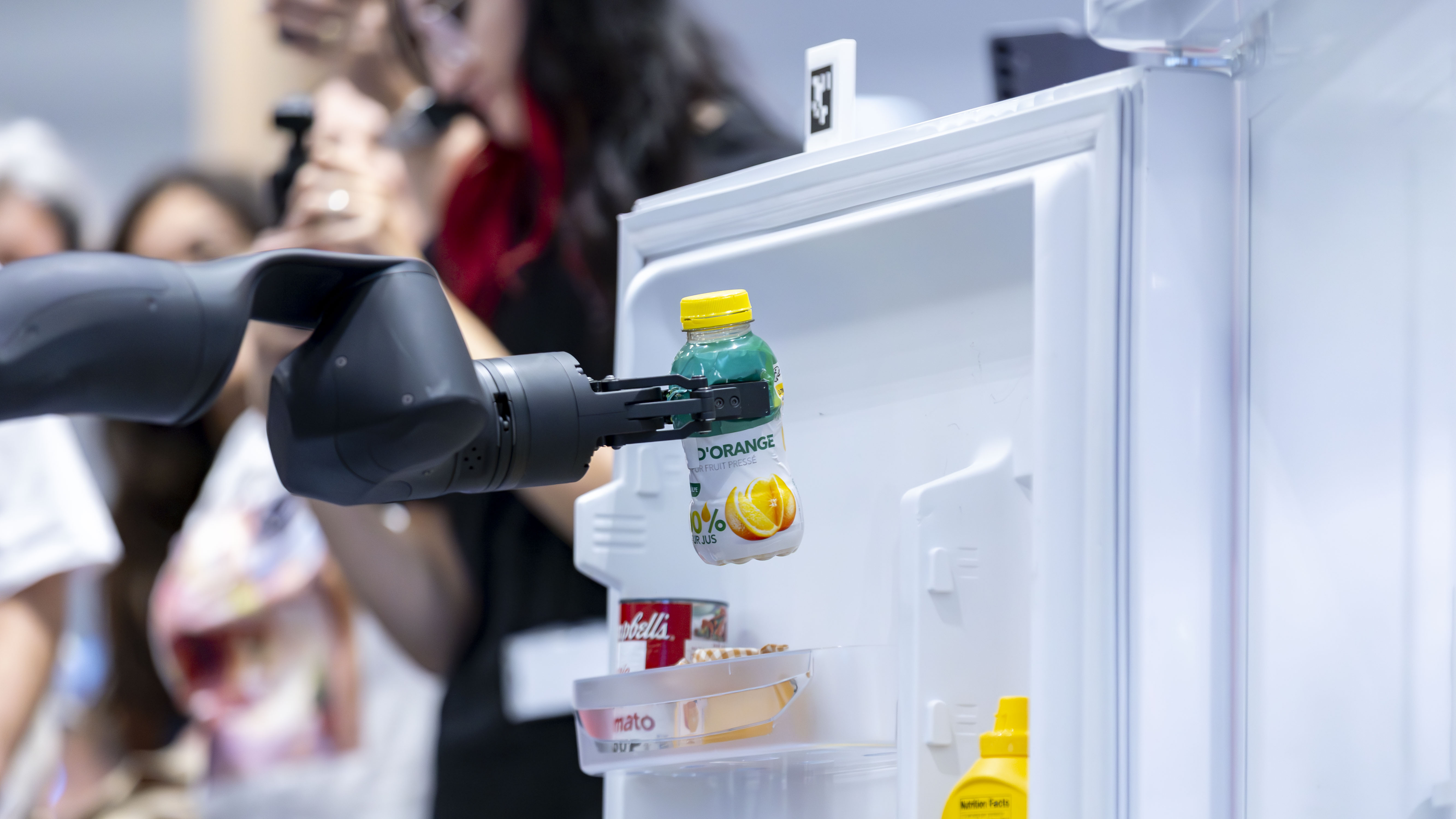
The centrepiece of the event was a live demonstration featuring 15 AI-powered robots developed within the European robotics ecosystem.
Rather than discussing the potential of robotics only in theoretical terms, participants were able to see European research in action. The demonstrations showed robots performing tasks ranging from manipulation and autonomous navigation to object handling and everyday activities, as well as robotic systems capable of learning to move, maintain balance and operate in complex physical environments.
The technologies showcased reflected the diversity of the euROBIN network and the rapid evolution taking place at the intersection of robotics and Artificial Intelligence.
Among the demonstrations were robotic technologies from institutions and companies across Europe, including DTI, CEA, Fraunhofer IPA, the University of Bremen, Technical University of Munich, Jožef Stefan Institute, DLR, Instituto Superior Técnico, Inria, Karlsruhe Institute of Technology, ETH Zurich, the Italian Institute of Technology, the University of Seville and PAL Robotics.
The demonstrations also made the concept of Physical AI tangible: AI moving beyond purely digital environments and enabling robots to perceive, learn, reason and act in the physical world.
All photo credits: © DLR. All rights reserved
From European research excellence to industrial leadership
Beyond the demonstrations, one of the central questions of the day was how Europe can transform its strong position in robotics research into greater industrial competitiveness.
Europe remains home to internationally recognised robotics research, scientific expertise and technological development. However, the accelerating convergence of AI and robotics is intensifying global competition, particularly with the United States and China.
The discussions at the European Parliament therefore looked beyond technological capabilities to the conditions needed to develop a stronger European robotics ecosystem, including investment, industrial scale-up and the ability to translate research results into successful European companies and technologies.
This challenge was also highlighted by Axel Voss, who stressed the importance of ensuring that technologies developed in Europe can also be commercialised and scaled in Europe.
The event provided concrete examples of both Europe’s strengths and the challenges ahead. Researchers interviewed during the event highlighted Europe’s strong scientific and technological position while pointing to differences in manufacturing and production capacity compared with other global players.
Bringing research, industry and policymakers together
Following the demonstrations, a round table brought together key stakeholders to discuss the future of AI-powered robotics in Europe and the measures required to strengthen Europe’s position in this rapidly evolving field.
At the end of the round table, euROBIN coordinator Prof. Alin Albu-Schäffer presented the Open Letter “Europe’s Robotics Moment: From Trustworthy AI to Trustworthy Robots” to Thomas Skordas, Deputy Director-General at the European Commission’s DG CONNECT. Supported by more than 70 signatories from the European robotics community, the letter calls for a dedicated European AI-Based Robotics and Autonomous Systems Programme and sets out five priorities for strengthening Europe’s position in AI-powered robotics, from research and infrastructure to industrial deployment, procurement, regulation and standards.
The programme continued with further demonstrations, media opportunities and networking, creating space for exchanges between the people developing robotic technologies and those involved in shaping the European policies and conditions under which they will evolve.
This dialogue between research, industry and policy is particularly important as robotics moves into a new phase. Advances in AI are allowing robots to operate in less structured environments, adapt to changing situations and perform increasingly complex tasks, opening opportunities across manufacturing, healthcare, logistics, services and many other sectors.
At the same time, Europe faces the challenge of ensuring that this technological transformation develops in line with European priorities, including competitiveness, technological sovereignty and a human-centric approach to AI and robotics.
euROBIN: building a European robotics ecosystem
The event marked an important moment for euROBIN, the European Network of Excellence in Robotics, which has worked to strengthen cooperation across Europe’s robotics community.
Bringing together 31 partner organisations across 14 countries and 26 European cities, euROBIN has created a network in which knowledge, technologies and robotic capabilities can be shared and transferred between institutions.
Funded under the European Union’s Horizon Europe research and innovation programme, the network has sought to go beyond individual robotics projects by building connections between leading research organisations, companies and the wider European robotics ecosystem.
The technologies brought together at the European Parliament demonstrated what this cooperation can look like in practice: different robots, institutions and research teams sharing a common European environment for advancing robotics and AI.

What comes next for European robotics?
The euROBIN Final Event demonstrated that Europe already has many of the ingredients needed to play a leading role in the next generation of robotics: scientific excellence, advanced technologies, a strong research community and companies developing innovative robotic solutions.
The next challenge is scale.
As AI increasingly moves from the digital world into machines capable of interacting with the physical environment, robotics is set to become an increasingly strategic technology for Europe. Turning European research excellence into industrial leadership will require continued cooperation between researchers, companies, policymakers and investors.
Bringing 15 AI-powered robots into the European Parliament offered a powerful demonstration of what Europe has already achieved. More importantly, it created an opportunity to discuss how that expertise can now contribute to a competitive, innovative and distinctly European future for robotics.
The robots are ready. The challenge now is ensuring that Europe is ready to scale them.